

Marketing Director
Ashley Andruss
Located In
Austin, Texas
Ashley Andruss is a multi-faceted marketing professional with a dynamic career spanning over 15 years. She brings a unique blend of technical expertise and creative vision, seamlessly integrating her background in computer science, software engineering, and data analysis with innovative marketing strategies. As the founder of Double A Marketing, Ashley is passionate about delivering tailored solutions that drive meaningful business results and elevate brand identities.
About
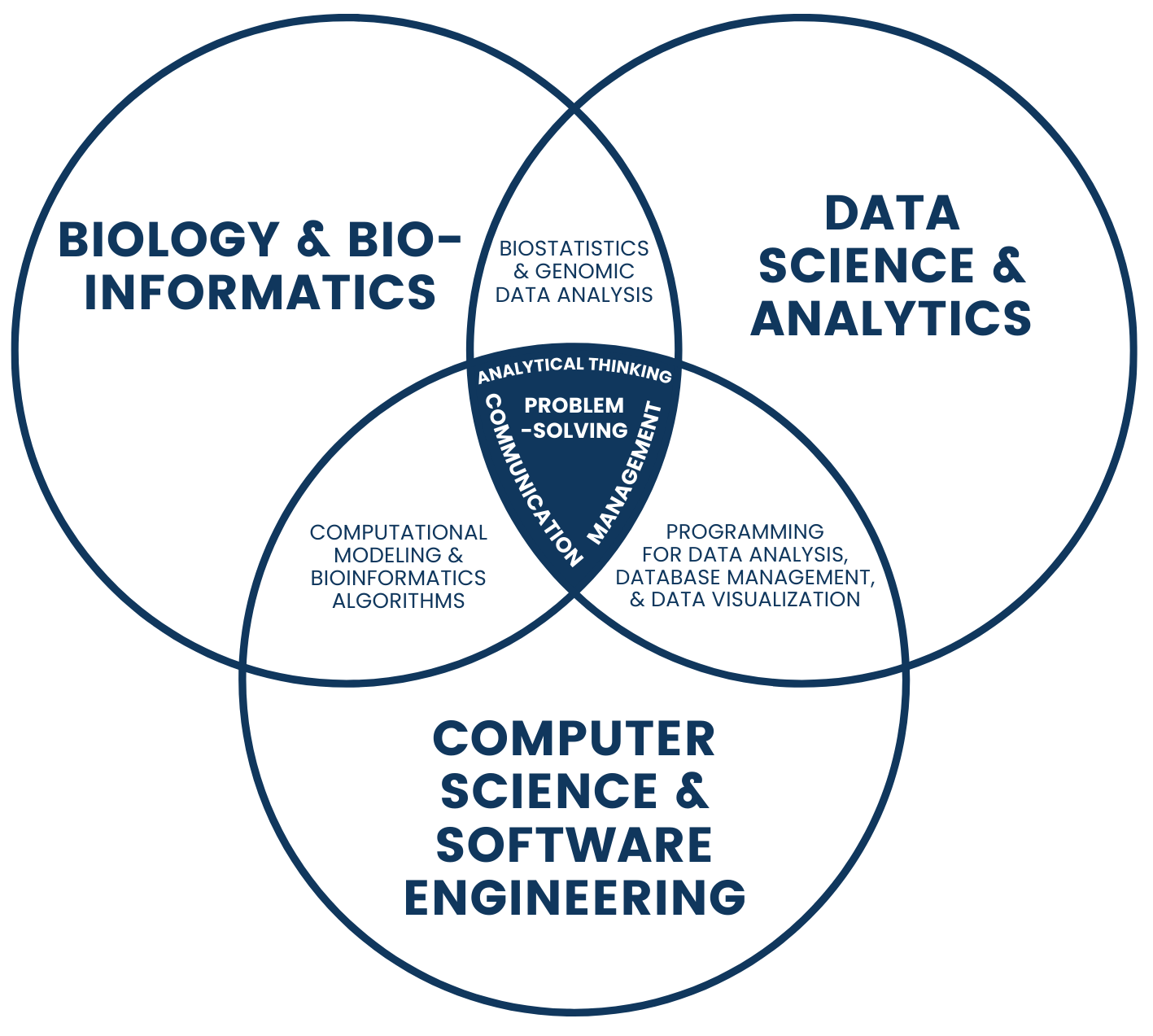
Education has been a critical part of Ashley’s journey, providing her with the foundation to merge technical expertise with creative problem-solving in marketing. She is a lifelong learner, constantly expanding her knowledge to stay ahead of industry trends and integrate data science into her marketing approach.
Educational Qualification
1
School Education
Graduated high school early with advanced courses and a focus on science and math.
2
College Education
A.S. in Biochemistry, Houston Community College, Dean’s List (2016). B.S. in Computer Science, Minor in Bioinformatics and Biomedical Sciences, University of Houston (2025).
3
Post Graduation
Continuing education in Data Science, Machine Learning, Software Engineering, and Digital Marketing to deepen her understanding of advanced computational techniques and their application in strategies.
Ashley's diverse skill set spans across multiple areas, from marketing strategies and digital analytics to technical project management and software development. Her ability to bridge the gap between marketing and technology makes her a unique asset in the industry.
Professional Skills
Ashley's commitment to excellence and continuous learning is evident through the numerous certifications and recognitions she has received over the years. Her dedication to staying updated with the latest industry trends ensures she delivers top-notch solutions to her clients.
Certifications & Awards
-
PowerBI & Excel for Data Science (2024)
-
Adobe Premiere Pro Certification (2020)
-
Energy Leadership Certification (2023, 2024 & 2025)
-
CITI Research Certifications (2017, 2019, 2024, & 2025)
-
Natural Sciences & Mathematics Dean's List (2024)
Ashley has also been recognized for her work in the book The ABCs of ChatGPT in Computer Science by Dr. N. Rizk, where she served as Project and CMAP Lead.
For an exhaustive list and links to awards and certifications, please visit her LinkedIn page.
Platforms and Skills
Website Development: CMS & Hosting
-
WordPress; Wix; BentoBox; React; Shopify; Squarespace; Webflow; GoDaddy; Hostinger; A2 Hosting
Software Engineering: Tools & Languages
-
C++; Python; R Studio; SQL; Linux: Ubuntu; VS Code; Anaconda; GitHub; JupyterLab; MobaXterm; Wireshark; FileZilla; LeetCode; Data Structures & Algorithms; Computer Architecture; Machine Learning; Neural Networks; Deep Learning; Automata & Turing Machines; Operating Systems; Algorithmic Mathematical Theory
Data Insights: Analytics, Visualization & Research
-
Jupyter Notbeook; R Studio; MATLAB; Google Analytics; PowerBI; Excel; Tableau; ParaView; PowerPoint; Semrush; Plugin .PHP; Market Research
AI Tools: Software
-
CoPilot; Chat GPT; Cursor; Replit; Gemini; Claude; Grammarly; Jasper; Midjourney
Business Operations: Tools, CRM & PM Software
-
Microsoft 365 Apps; Zoom; Doodle; ClickUp; Monday.com; Slack; Discord; Zoho Suite; QuickBooks; Gusto; Google Drive; AWS; Salesforce; NetSuite; SCRUM
Bioinformatics: Tools, Genomics & Proteomics
-
SnapGene; NCBI; UniProt; PDB; BDGP Fruitfly; Sciencebuddies; Bioinformatics SMS; Expasy; IDT Codon Optimization Tool; EMBOSS; InterPro; PROSITE; DeepTMHMM; Phobius; SignalP; BLAST; FirstGlance in Jmol; R Studio; Python
Graphic Design: Brand & Marketing Design
-
Adobe Suite: Illustrator, Photoshop, InDesign, After Effects; Canva; Figma; Biorender
Digital Marketing: Video, Email & Advertising
-
Adobe Suite: Premiere Pro, Rush, After Effects, Express; iMovie; Mailchimp; HubSpot; Constant Contact; Mail Merge; SEO; Google Ads; LinkedIn Ads
Event Management: Tradeshows & Events
-
TripleSeat; Eventbrite; Whova; BaseCamp; Asana; Trello; RSVPify; International Webinar Platforms; Sponsorship Management; Tradeshow Booth Design & Management
Social Media Management: Algorithm Knowledge & Scheduling
-
LinkedIn; Facebook; Instagram; YouTube; X (Twitter); Yelp; Later; Buffer; SocialPilot; Hootsuite
The skills, tools, and platforms mentioned above are not an exhaustive list.
Degree-Focused Coursework and Topics
Data Science and Machine Learning
-
Data Science I: Concepts including exploratory data analysis, data visualization, statistical inference and modeling, machine learning, clustering, post-processing and interpreting results.
-
Data Science II: Emphasis on practical techniques for working with large-scale data. Advanced machine learning topics such as Neural Networks and Deep Learning, ensemble learning approaches and model evaluation.
-
Fundamentals of Artificial Intelligence: Topics include search techniques, reasoning with logic, planning, decision making, machine learning, and robotics.
-
Independent Research: The student pursued a project in the field of image-to-image translation/information in medicine using deep learning methods. This field belongs to the area of radiology and in particular methods for fast MRI and lower fields for use in diagnosis as well as robot-assisted interventions. Low field MRI has a far lower cost than the higher ones and can be used in mobile units or rural areas. Interventional robots can be made easier to operate with. Their fundamental issues are ultra-low SNR and CNR. We focused on physics-driven AI methods to transform such low-quality data into useful information.
Biomedical Science and Bioinformatics
-
Biotechnology: Review of techniques used in food, agricultural, pharmaceutical, industrial, and environmental biotechnology; guest presentations in biotechnology.
-
Biotechnology Regulatory Environment: Role of regulatory agencies during the discovery, development, and manufacture of new medical devices, biotechnology, biomedical, and pharmaceutical products.
-
Genomics/Proteomics and Bioinformatics: Overview of the fields of bioinformatics and genomics. Topics, tools, issues and current trends in these and related fields.
-
Health Promotion and Disease Prevention: Theories and strategies in health education for prevention and control of common diseases and promoting health.
-
Associate of Science in Biochemistry
Computer Science
-
Programming & Data Structures: Fundamental data structures: arrays, lists, stacks, queues, hash tables, trees; sorting and searching; graph algorithms; design, analysis, and comparison of algorithms. Correctness verification techniques such as assertions and invariants. Review program specification, unit testing, and debugging.
-
Data Structures & Algorithms: Algorithm analysis and design, heuristics; advanced tree structures; advanced hashing techniques; sorting and searching; graphs, sets. NP-Completeness, Time and Space complexities.
-
Computer Science Programming: Fundamental principles of computer science, basic hardware and software components of a computer system, computational thinking, basic algorithms, and programming concepts. Hands-on experience in problem solving by designing, writing, testing and debugging programs in a modern programming language. Fundamental concepts of structured programming; procedures and elementary data structures with a focus on problem solving strategies and implementation; computer organization, structured procedural programming, C/C++ programming language, and algorithm design.
-
Automata & Computability: Automata theory (finite-state automata, push-down automata, Turing machines); formal systems (regular and context-free languages and grammars); computability, Church-Turing thesis.
-
Operating Systems: Logic design, principles of operation of digital computers, and analysis of major components: arithmetic processing, memory, control and input/output units, instruction pipelining, SIMD and multiprocessor systems.
-
Database Systems: Database design with ER model, relational model and normalization up to 3NF/BCNF normal forms. Relational algebra and basic SQL queries combining filters, joins and aggregations. SQL transaction processing. Overview of DBMS internal subsystems including: storage, indexing, query optimizer, locking, recovery manager, security mechanisms. Database application development.
-
Computer Organization & Architecture: Low-level computer design, basics of digital design, and hardware/software interface; Principles of pipelining and caching, instruction pipelining, SIMD and multiprocessor systems.
-
Software Engineering: Introduction to the concepts of software engineering. Identification of problems related to the development of large software systems. Software project planning, requirements analysis, design, implementation, quality assurance and maintenance.
-
Computer Networks: Data communications; network protocols and architecture; local and wide-area networks; internetworking.
Advanced Mathematics
-
Discrete Math: Formal mathematical concepts and techniques that are fundamental for modeling and analyzing discrete structures. Topics include: logic, proofs, basic set theory, functions, elementary number theory, mathematical induction, recursion, counting techniques, recurrence relations, algorithms, and graph theory.
-
Calculus I, II & III: Calculus of rational functions, limits, derivatives, applications of the derivative, antiderivatives, the definite integral with applications, mean value theorem, fundamental theorem of calculus, and numerical integration. Calculus of transcendental functions: additional techniques and applications of integration, indeterminate forms, improper integrals, Taylor’s formula, and infinite series. Calculus of functions of several variables: calculus of vector-valued functions, partial differentiation, multiple integrals.
-
Statistics for Sciences: Graphical and descriptive methods in statistics, probability, random variables and distributions, sampling, estimation, hypothesis testing, regression, analysis of variance, exploratory and diagnostics, statistical computing.
-
Linear Algebra: Solutions of systems of linear equations, matrices, vector spaces, linear transformations, similarity, eigenvalues and eigenvectors.